

Stress is a major trigger for many of us with bipolar disorder. It is vital that we learn to recognise and manage it.
HOW FULL IS YOUR STRESS BUCKET?

Stressors fill up your bucket – such as:
- Work What are your stressors?
- Family
- Relationships
- Money
- Lack of Sleep
Eventually the bucket overflows – This can manifest as rage, crying, anxiety, depression, hypomania or mania. What does it look like when your stress bucket overflows?
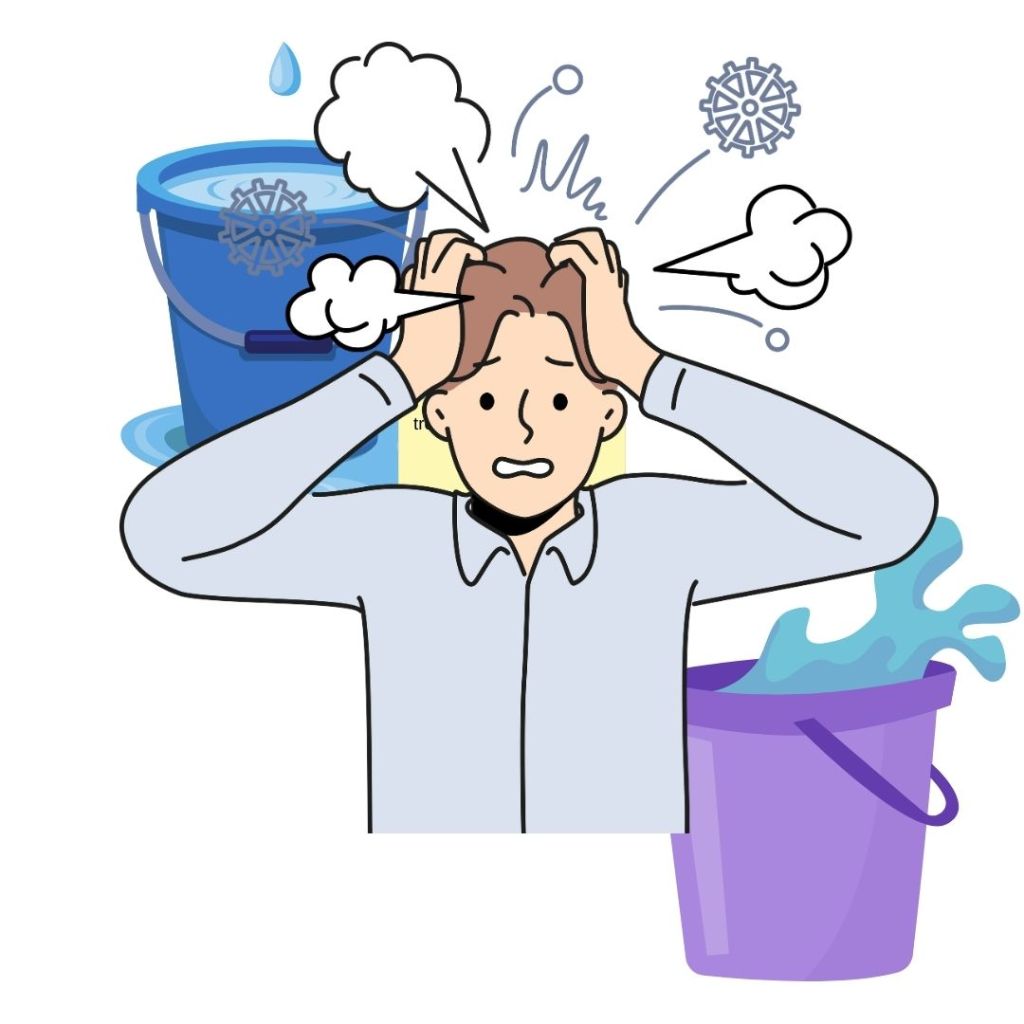
You need to find outlets for your stress. Ways to relive stress, coping mechanisms, to release the pressure. Let some water out of your bucket before it overflows and you have a big mess on your hands!
What are your stress relievers?
- Sleep – Rest
- Eat Healthy – Hydrate
- Meditation – Yoga – Mindfulness
- Exercise
- Nature – Outdoors
- Pets
- Socialise – Laughter
PUT YOUR WORRIES TO BED
Identify the worry – What are you worrying about? – Can you do anything about it?
No?
- Let go of the worry
- Change the focus of your attention
- Distract yourself
Yes?
- Create an action plan – What? When? How?
- Can you do it now? Yes? Then do it, don’t procrastinate!
- Now let your worry go
- Schedule it if you cannot do anything about it now – then let the worry go
- Change the focus of your attention

Muscle Relaxation Technique
Stress manifests in our minds and bodies. It is important to learn the signs of stress in your body. This can often be in the form of muscle tension. Being able to relax your body, will help reduce your stress levels.
- Get comfortable – this exercise can be done sitting in a chair, sitting on the floor, or lying down.
- Tense the muscles in your feet slowly while taking a deep, slow breath through your nose.
- Hold those muscles tight whilst holding your breath for 5 seconds.
- Breath slowly out through your mouth, whilst releasing the tension in your feet.
- Repeat this with different body parts, working your way up to your head.
- Focus on key spots of tension, such as the neck, the jaw, shoulders.
HOW DO YOU RELIEVE STRESS? LET US KNOW IN THE COMMENTS BELOW OR ON SOCIAL MEDIA

What is Bipolar Disorder?
Bipolar disorder involves extreme mood swings, from severe depression to intense highs. It affects 1-3% of the population, with symptoms often appearing in late teens. There are different types, each with distinct characteristics.…

Bipolar Survival Toolkit
These are the Bipolar Survival Tools that allow me to manage my illness

Gratitude and bipolar disorder
Practicing gratitude daily can significantly improve mental well-being, especially for those with bipolar depression. It enhances happiness, reduces stress and anxiety, and fosters deeper connections. By acknowledging life’s small blessings and maintaining gratitude,…

15 Common Bipolar Triggers
Getting to know your triggers is an essential part of managing bipolar disorder. They look different for everyone. What triggers one, may not trigger another.
I have listed the most common triggers that…
When the Clocks Change – Bipolar and Circadian Rhythms
In the U.K. our clock changes to British Summer Time overnight on the 29th march in 2025. The clock will go forward one hour. Bipolar disorder can make you sensitive to these time…
15 Top Tips for managing bipolar disorder
These are my top tips for managing bipolar.
Wisdom passed on to me by my bipolar peers that’s made a real difference to my life. Now it’s my turn to pass it…
 Bipolar Rough Guide
Leave a comment